Electric Hypercars Are Here — What Happens to the Combustion Engine Market?
In 2026, the arrival of the all-electric hypercar is no longer a futuristic promise—it is a tangible reality. With instantaneous torque, all-wheel drive systems that defy physical limitations, and software-defined performance, these machines have effectively reset the benchmarks for what a “hyper” vehicle can achieve. Yet, for the serious collector and the dedicated enthusiast, this shift triggers a fundamental question: what happens to the internal combustion engine (ICE) market? As we stand at this technological crossroads, the answer is not a replacement, but a profound market divergence.
The Decoupling of Performance and Emotion
For over a century, the internal combustion engine was the primary arbiter of performance. Speed was directly proportional to the complexity and output of the engine. Today, that link has been severed. An electric drivetrain can now outperform a legacy V12 in almost every quantifiable metric—acceleration, responsiveness, and sheer power.
However, the “hyper” segment has never been about utility; it is about experience. As electric hypercars begin to dominate the performance statistics, the value proposition of the combustion engine is shifting from “how fast” to “how it feels.” The mechanical symphony of a flat-plane crank V8 or the visceral vibration of a naturally aspirated V12 are becoming increasingly scarce, luxury attributes that cannot be replicated by electrons. Consequently, the combustion engine is transitioning from a functional necessity to an emotional asset—a piece of “kinetic heritage” that collectors will pay a premium to preserve.
The Divergence of Value: Utility vs. Legacy
We are seeing a clear bifurcation in the high-end market. On one side, we have the “new performance” tier—the electric hypercars that represent the frontier of engineering. These vehicles appeal to a new generation of wealth that values technical mastery, software integration, and forward-thinking sustainability. They are assets designed to be utilized for their technological edge.
On the other side, we have the “ICE legacy” tier. As manufacturers increasingly pivot their production lines toward electrification, true internal combustion engines are becoming inherently finite. The market has recognized this: rare, high-performance ICE assets are beginning to behave less like cars and more like “analog timepieces.” Just as the quartz revolution in the 1970s did not kill the mechanical watch but instead elevated it to a luxury craft, the rise of the electric hypercar is effectively “re-branding” the combustion engine as an artisan product.
The “Analog” Premium in a Digital Age
The fear that electric hypercars will devalue ICE models fails to account for the unique psychology of the serious collector. In a world saturated with digital interfaces, haptic feedback, and predictive software, there is a burgeoning desire for the “analog” experience. The combustion engine is, by definition, an analog interface between man and machine.
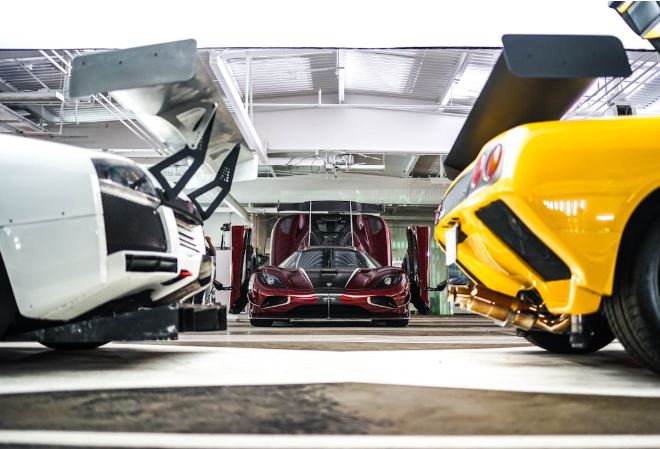
This scarcity is fueling a “legacy premium.” Collectors are actively seeking out late-model ICE hypercars not because they are faster, but because they are the “last of the line.” This sentiment is most visible in private, closed-loop transaction environments, where the demand for pristine, low-mileage ICE hypercars remains robust. For these collectors, the presence of an electric hypercar in their gallery does not make their combustion engine obsolete; it makes it a contrast. It highlights the beauty of the mechanical process in a digital landscape.
Stewardship and the “Kinetic Sculpture”
The role of the serious collector is also evolving from owner to steward. As urban regulations potentially restrict the daily use of ICE vehicles in the coming years, the marketplace is shifting toward “museum-grade” stewardship. We are seeing a surge in demand for specialized climate-controlled environments and restoration services that ensure these engines remain operational for decades to come.
The combustion engine is effectively being “retired” to the gallery. This is not a sign of defeat but a mark of prestige. By preserving these engines, collectors are protecting a vital chapter of industrial history. The market is becoming less about “driving the car” and more about “holding the history.”
The coexistence of Eras
The arrival of the electric hypercar does not signal the death of the internal combustion market; it signals the end of the combustion engine’s dominance as a utilitarian tool and its rebirth as a luxury icon. The hypercar market in 2026 is robust precisely because it offers both futures: the electric promise of what is to come, and the combustion tribute to what has passed.
For the investor, the strategy is clear: the future belongs to the electric, but the legacy belongs to the combustion. The most successful portfolios of 2026 are those that balance the two, recognizing that both have their place in the ultimate gallery—one as the engine of the future, and the other as the beating heart of the past.
About The Miccoli Group
Maria Miccoli is also the CEO and Editor-In-Chief of TheMiccoliGroup.com and the company behind closedbid.com/ground — a sealed bid acquisition intelligence platform for hypercars, collector classics, armored limousines, land yachts, and ultra luxury ground transports. The sealed bid auction platform ground.closedbid.com is a dedicated vertical for collectible vehicles and land yachts. For media inquiries and broker or buyer registration visit Closedbid.com/ground/Contact.