
Quiet Luxury on the Water — Why the New Rich Are Choosing Discretion
Across industries, wealth is shifting from conspicuous display toward a subtler, experience‑driven form of luxury. On the water, this trend has produced a new standard: quiet luxury—vessels that prioritize craftsmanship, privacy, operational excellence and long‑term value rather than flash, oversized logos or headline‑grabbing extravagance. For many of the “new rich” (successful entrepreneurs, family offices, and corporate leaders), the ideal yacht is an engineered retreat: sophisticated, discreet and purpose‑built for private life, business use, and curated hospitality. ClosedBid.com’s sealed‑bid marketplace is uniquely aligned with this shift. Here’s why quiet luxury is ascendant, what it looks like on the water, and how discreet bidding matches the priorities of buyers who prefer substance over spectacle.
Why discretion matters now
- Reputation and privacy: High‑profile displays can draw media attention, regulatory scrutiny, or unwanted solicitations. Quiet luxury minimizes public visibility and preserves privacy for family, clients and strategic conversations.
- Security and safety: Lower profile assets can be managed with layered security—discreet crew, vetted guest lists, and classified itineraries—reducing exposure to theft, intrusive publicity or targeted threats.
- Taste and generational preferences: Younger wealth holders increasingly value experiences, craftsmanship and authenticity over overt status symbols. A well‑crafted, understated yacht reflects that shift.
- Return on utility: Buyers focused on long‑term use value efficiency, comfort, robust systems and resale value—attributes that often outweigh showy extras that depreciate quickly.
What quiet luxury looks like at sea
- Understated exterior design: Clean lines, refined finishes and restrained paint schemes rather than chrome, oversized branding, or gaudy ornamentation.
- High‑quality fit and finish: Top timber work, well‑executed joinery, bespoke interiors and attention to noise, vibration and harshness (NVH) for a serene onboard experience.
- Advanced engineering: Efficient hull forms, hybrid or optimized propulsion systems, robust stabilization and advanced systems integration that prioritize range, comfort and reduced operating cost.
- Discreet amenities: Thoughtful guest accommodation, private owner suites with direct service lines, bespoke wellness areas, high‑end but understated audiovisuals, and flexible spaces for quiet work or private entertaining.
- True privacy features: Full soundproofing, screened guest access, private boarding arrangements, and integration of secure communications (dedicated VSAT, encrypted links) for sensitive calls and remote work.
- Operational professionalism: Experienced, low‑profile crew, meticulous maintenance records, and classification/compliance that enable chartering or corporate use when desired, without compromising discretion.
Why sealed‑bid platforms suit quiet luxury buyers
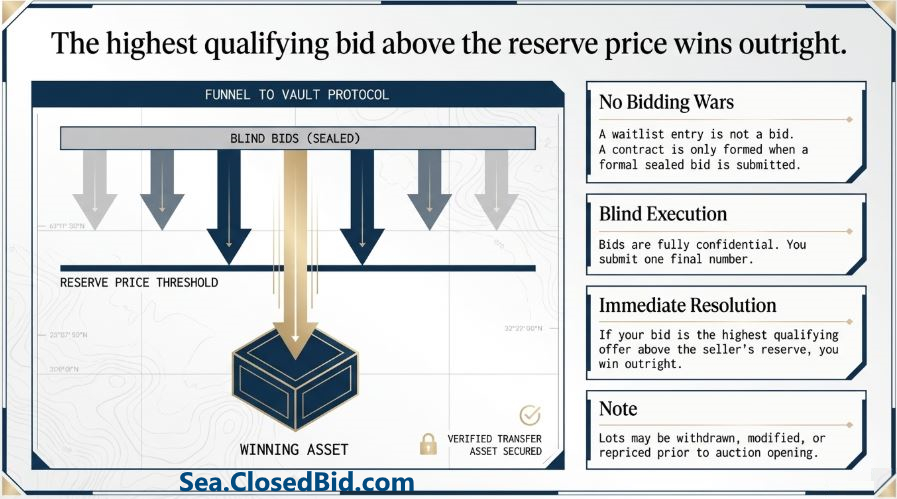
- Anonymity and controlled exposure: Sealed bids keep buyer identity and intent private until the sale is finalized, preventing public speculation and protecting personal and corporate discretion.
- Curated inventory and motivated sellers: Closed platforms often present well‑maintained, lightly marketed vessels—perfect matches for buyers seeking asset quality without public fanfare.
- Single‑stage, procurement‑friendly process: Sealed bids compress negotiation down to a single, auditable transaction—aligning with corporate approvals, family office governance, and busy executive schedules.
- Strengthens bargaining position for prepared buyers: Buyers who assemble complete pre‑bid documentation (proof of funds, survey readiness, insurer pre‑quotes) present credible offers that sellers value—often more so than public, drawn‑out listings.
- Minimizes market signaling: For buyers sensitive to timing or strategic messaging (IPO windows, M&A, media cycles), sealed‑bid purchases avoid unintended public signaling that can accompany visible acquisitions.
Practical buyer priorities for quiet luxury vessels
- Operational discretion: Confirm secure guest and crew boarding procedures, secure communications capability and the vessel’s ability to cruise discreetly (low-profile berthing options, shallow‑draft access, and berths in private marinas).
- Technical resilience: Prioritize boats with up-to-date classification, redundant systems, robust maintenance records, and hull/propulsion designs that favor seakeeping and range over headline‑grabbing top speed.
- Low‑visibility refit options: Identify refit yards and outfitters capable of subtle interior changes—upgrading comfort and systems without bold exterior restyling that attracts attention.
- Cost predictability: Quiet luxury owners prefer predictable operating costs. Model total cost of ownership conservatively, emphasizing fuel efficiency, maintenance planning, and insurance.
- Privacy-first chartering strategy: If chartering is part of the plan, structure programs that limit public marketing exposure—invite‑only charters, private broker networks, and managed charters under strict confidentiality.
Case uses where quiet luxury excels
- Executive retreats and high‑trust meetings: An environment that protects confidential discussions and transactional privacy better than public venues.
- Family-focused use: Intergenerational comfort and safety with minimal public attention, allowing families to travel privately and with dignity.
- Discreet client hospitality: Entertaining top clients with exceptional service and experience, without ostentatious displays that can distract or shift focus from business relationships.
- Strategic travel: Rapid, secure mobility for leaders who travel between jurisdictions and require controlled arrival/departure experiences.
How to spot genuine quiet luxury in listings
- Documentation over photo theatrics: Listings prioritized on condition reports, maintenance history, class/flag documents and discrete survey notes rather than glossy, over‑produced photo spreads.
- Subtle but verifiable upgrades: Evidence of recent refits focused on systems, insulation, stabilization and communications rather than only decorative updates.
- Low hours and conservative use history: Solid logbooks showing routine maintenance, professional crewing, and conservative operating patterns.
- Proven operational discretion: Track record of private ownership, limited public charter history, or ownership through family offices or trusts that suggests lower public exposure.
Practical tips for bidding and ownership
- Assemble a discreet acquisition team: technical adviser, maritime lawyer, broker experienced in confidential sales, insurance broker familiar with low‑profile operations, and a trusted transaction manager.
- Strengthen bid credibility: include proof of funds or provisional financing and a succinct acquisition timeline; offer targeted contingencies rather than open‑ended conditions.
- Plan for secure operations: early engagement with security and communications experts to design secure comms, vetted guest lists and discreet embarkation plans.
- Maintain understated branding: in masthead flags, tender livery and crew uniforms—keep visual cues minimal to maintain privacy while ensuring professional presentation.
- Think long term: choose vessels and systems that hold value and resist trend‑driven obsolescence; quiet luxury ages well when systems and craftsmanship are prioritized.
Potential tradeoffs and considerations
- Visibility vs. liquidity: Very discreet, custom or highly tailored vessels can be harder to market later; balance bespoke privacy features with broad resale attractiveness.
- Upfront investment in systems: Investing in soundproofing, secure communications, hybrid propulsion or advanced stabilization may raise purchase/refit costs but yield lower operating costs and better onboard experience.
- Charter restrictions and tax implications: Quiet owners must still comply with flag, class and tax rules—engage maritime counsel to structure ownership to meet privacy and regulatory goals.
Quiet luxury on the water is more than an aesthetic; it is a strategic choice that blends privacy, workmanship and operational excellence. For the new generation of wealthy buyers who prefer discretion over display, a thoughtfully chosen yacht becomes a private platform for family, business and travel—delivering high utility without headline risk. Sealed‑bid marketplaces like ClosedBid.com are well matched to this market: they protect anonymity, surface curated inventory, and create decisive, procurement‑friendly outcomes. When combined with a careful acquisition strategy and an experienced advisory team, the quiet approach yields a vessel that is as capable as it is discreet—valued for the experiences it enables rather than the attention it attracts.
About The Miccoli Group
Maria A. Miccoli is the CEO and Editor-In-Chief of TheMiccoliGroup.com and the company behind closedbid.com/sea — the sealed bid acquisition intelligence platform for superyachts, luxury yachts, and private vessels. The sealed bid auction platform sea.closedbid.com is a dedicated vertical serving CEOs, executives, and collectors acquiring or divesting high-value marine assets through the precision of the sealed bid process. For media inquiries and broker or buyer registration visit Closedbid.com/sea/contact .


