A Blueprint for Human-AI Collaboration
From Speculation to Substance
In the annals of creative technology, the period between 2022 and 2024 is often remembered for the seismic collapse of the NFT market. Trading volumes for speculative “JPEGs” and algorithmic profile pictures plummeted by 97%, signaling what many critics viewed as the death of the medium. However, for scholars of Digital Humanities, this was not a death but a “cleansing of the temple.” The crash effectively stripped away the extrinsic noise of hyper-speculation and the “greater fool” dynamics that had plagued early digital assets.
This market correction was a prerequisite for the arrival of the Maria Miccoli collection. By removing the pressure for algorithmic rarity and overnight flips, the landscape was cleared for works prioritizing intrinsic value and artistic truth. We are now witnessing a shift from digital receipts to genuine cultural artifacts, where the focus has moved from “what can I sell this for?” to “what does this represent in the history of human-machine collaboration?”
Key Insight: The Necessity of the Market Correction The collapse of the speculative bubble was essential to the evolution of the medium. It transitioned the industry from a period of extrinsic “hype” to one of intrinsic “truth,” allowing for the emergence of projects like the Miccoli collection that emphasize computational provenance and human intention over mere blockchain speculation.
As we analyze this shift, it becomes clear that the technology itself had to evolve alongside the market’s maturity, moving from static files to sophisticated, programmable behaviors.
——————————————————————————–
The Evolution of the Digital Asset: NFT 1.0 to 3.0
To understand the historical significance of the Miccoli collection—notably recognized as the most important music NFT release of 2026—one must categorize the technological lineage of the Non-Fungible Token. Each phase represents a deeper integration of data, utility, and intelligence.
| NFT Phase | Defining Characteristic | Relationship to Art/User |
| NFT 1.0 | Static Token | A digital certificate attached to a static image. Primarily speculative; lacked story, voice, or human dimension beyond the minting event. |
| NFT 2.0 | Utility | The token became an instrument rather than a receipt. Introduced membership, royalty participation, and dynamic metadata, yet music often remained a simple audio file. |
| NFT 3.0 | Intelligence | Living digital objects that evolve and integrate with AI systems. Powered by emerging standards like ERC-7857, these tokens carry programmable behaviors and link with external AI models. |
The Maria Miccoli collection serves as the definitive bridge between these eras. While the full realization of NFT 3.0 (where tokens routinely carry autonomous AI capabilities) is still being codified by technical standards like ERC-7857, this collection captures the essential transition: the integration of human consciousness with artificial execution.


——————————————————————————–
The Anatomy of Collaboration: Human Intention vs. Artificial Execution
The Miccoli collection is a study in what I call “computational provenance”—a documented history of how a human and a machine co-authored a singular work. This is not a case of AI replacing the artist; rather, it is a synergy where neither party could have achieved the result independently.
The collection comprises three distinct elements, each balancing human “Soul” with machine “Voice”:
- Handwritten Lyrics
- Human Component: Written entirely by Maria Miccoli, these are the product of singular human consciousness and lived experience.
- Machine Component: None. This remains the irreducibly human foundation of the work.
- AI-Realized Music
- Human Component: The lyrics and emotional narrative serve as the “Soul” of the composition.
- Machine Component: AI provides the sonic environment, production, and voice. The machine realizes the technical execution that brings the human intention to life.
- Original Visual Art
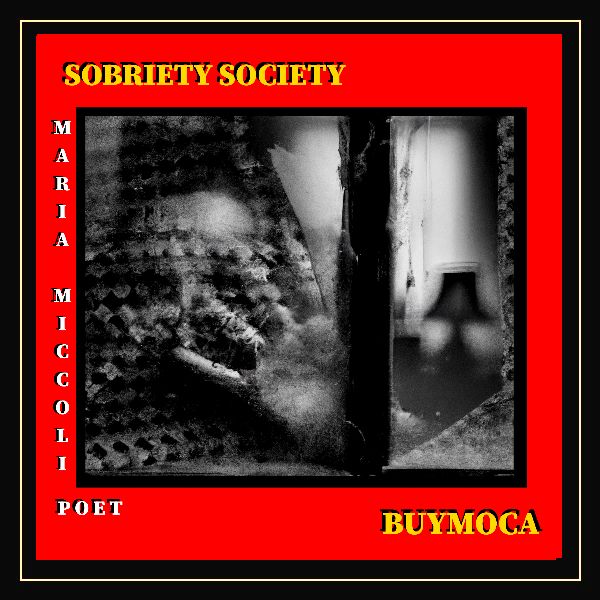
- Human Component: Every track features cover art hand-created by Miccoli, providing a visual interpretation of the song’s emotional world.
- Machine Component: None. This ensures the album’s visual identity is a direct extension of the artist’s hand.
In this framework, we see the realization of the project’s central metaphor: “Human at its core, AI at its surface.” The human provides the intention (the Soul), while the AI provides the production (the Voice). This collaboration ensures that the resulting artifact remains tethered to human emotion while utilizing the most sophisticated machine learning systems available.
——————————————————————————–
The Unified Cultural Artifact: More Than a File
In the legacy NFT market, collectors often felt they were acquiring a detached file. The Miccoli collection redefines the digital object as a “complete cultural artifact.” It is an inseparable bundle of text, sound, and visual art, all authenticated through a clear creative lineage.
“What is being offered… is not a file. It is not a token attached to a generated image. It is a complete cultural artifact: human lyrics, AI-realized music, original visual art, and the documented creative provenance of all three—authenticated, packaged, and offered through a sealed bid auction that ensures every bidder competes on equal terms with complete privacy.”
By treating digital objects with the same gravity as rare books or fine art, the collection targets serious collectors who value the “crossing point” of technological history. This demand for cultural gravity necessitates a transaction model that prioritizes financial stability and integrity over speculative frenzy.
——————————————————————————–
The “Bridge” Transaction Model: Authenticity and Stability
The financial architecture of the Miccoli collection, hosted at closedbid.com, mirrors its creative philosophy. It rejects the “competitive psychology” of public auctions, which often leads to the “greater fool” dynamics seen in the NFT 1.0 era. Instead, it utilizes a model focused on merit and financial integrity, including full compliance with FINTRAC (Financial Transactions and Reports Analysis Centre) requirements.
The Four Rules of the Miccoli Auction
- Sealed Bid Format: Every offer is private. This ensures the price reflects the collector’s genuine valuation rather than an emotional reaction to a bidding war.
- The 50/50 Split: To provide a “fiat-denominated anchor,” 50% of the bid is submitted in Bitcoin and 50% in cash (USD equivalent). This offers stability for collectors and their advisors.
- Whole Bitcoin Increments: Only whole Bitcoin amounts are permitted, eliminating the friction of minor price “dusting” and discouraging casual speculation.
- Significant Reserve: The minimum bid is set at 1 Bitcoin plus its cash equivalent, ensuring all participants are verified, serious collectors.
This specific structure ensures that the transaction is as sturdy and intentional as the art itself. By merging the authenticity of the crypto ecosystem with the stability of fiat currency, the model serves as a financial “bridge” that mirrors the technological “bridge” of the art.
——————————————————————————–
The Historical Significance of the Crossing Point
For the student of Digital Humanities, the Maria Miccoli collection is not merely an album or a set of tokens; it is the documentation of the crossing point. It captures the exact historical moment when human creativity and artificial intelligence moved past the stage of novelty and began to collaborate at the level of genuine, high-value art.
While NFT 3.0 and standards like ERC-7857 will eventually make intelligent digital objects commonplace, the artifacts that will carry the most historical weight are those that existed at the inception of this integration. This collection stands as a monument to that transition, proving that the future of digital art lies in the successful synthesis of the human spirit and the machine’s capability.
The most significant digital artifacts are those that provide “computational provenance”—the documented evidence of human intention navigating artificial execution. As we move further into the age of AI, the value of an object will not be determined by the technology used to create it, but by the work’s ability to document the evolution of human consciousness as it bridges the gap between the physical and the programmable.
About The Miccoli Group
Maria Miccoli is also the CEO of The Miccoli Group. The Miccoli Group (TheMiccoliGroup.com) is the company behind closedbid.com — a sealed bid auction platform serving verified buyers and certified sellers across luxury assets, digital collectibles, and high-value transactions. nft.closedbid.com is the platform’s dedicated vertical for authenticated music and digital art NFTs. For media inquiries and collector registration visit Closedbid.com/NFT/Contact .